Can your sleep tracker detect sleep apnoea?
Consumer sleep trackers estimate sleep from body movement and an optical heart rate sensor. They are reasonably good at telling you roughly how long you slept and very good at resting heart rate — but they do not measure airflow or breathing effort, which is precisely what obstructive sleep apnoea is made of. A normal sleep score does not rule it out.
- Sleep or awake: around 86–89% agreement with a clinical sleep study.
- Which sleep stage: only around 50–65% agreement — and these are the numbers people worry about most.
- Sleep apnoea: not measured. Someone with 30–40 breathing pauses an hour can produce an unremarkable score.
- Night-to-night variation in healthy adults has a standard deviation of roughly 67–86 minutes. One odd night means nothing.
- The signal that matters is not a low score — it is persistent unexplained fatigue, especially with snoring, morning headache or witnessed pauses. That needs a sleep study.
A good number of the people who come to see me about their sleep arrive having already checked their score that morning. They have optimised everything the app suggested — earlier bedtime, cooler room, no phone, magnesium, no coffee after midday — and they are still exhausted. Their tracker says their sleep is fine.
The instinct behind sleep tracking is a good one. Sleep matters enormously for cardiovascular health, metabolic health, mood, immunity and cognition, and a generation of people taking it seriously is a genuine improvement on the culture that preceded it. The difficulty is the gap between what people believe these devices are measuring and what they are actually capable of measuring — and the fact that the most clinically important thing about sleep is precisely the thing they cannot see.
How a tracker works — and why that matters
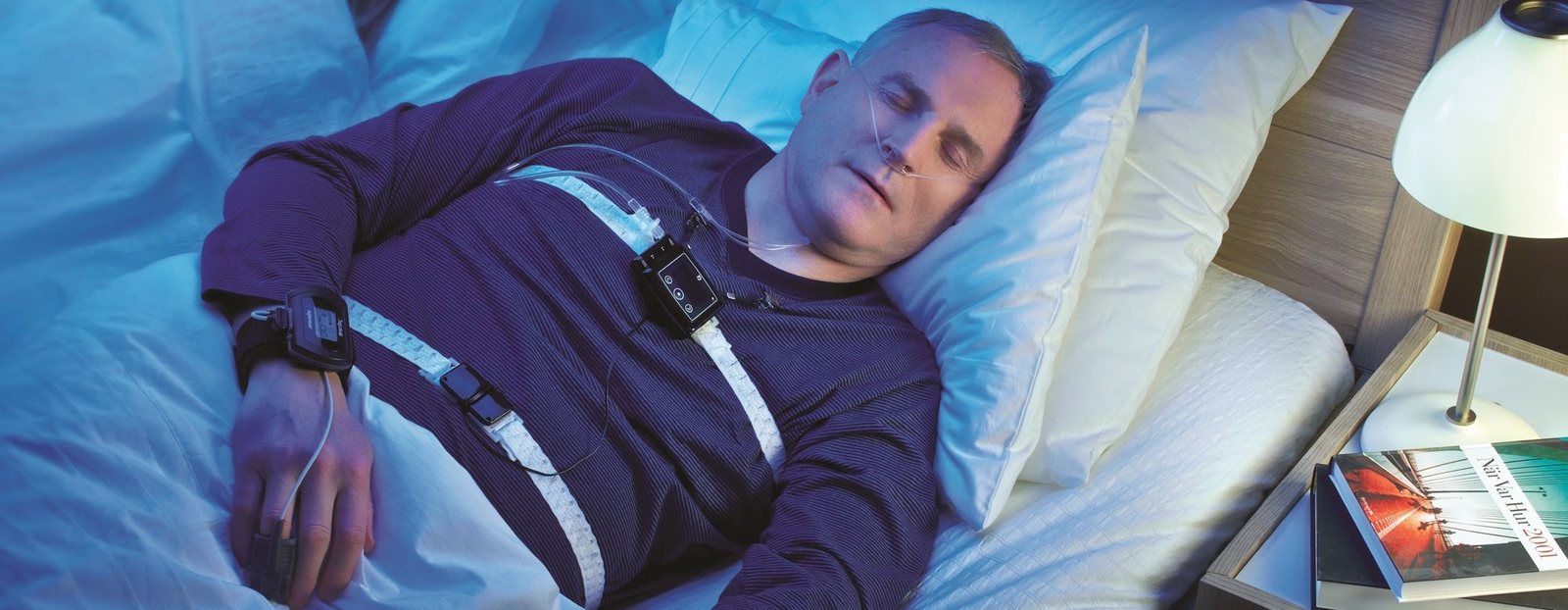
A clinical sleep study measures sleep directly. Full polysomnography records brain wave activity with scalp electrodes, along with eye movements, chin and leg muscle tone, heart rhythm, airflow at the nose and mouth, the effort of breathing at the chest and abdomen, and blood oxygen saturation. A trained technician then scores every thirty-second window of the night.
A consumer tracker has two inputs. An accelerometer detects whether you are moving or still. A photoplethysmograph — the small green light on the underside of the device — shines light through the skin and reads changes in blood flow with each heartbeat. From those two data streams, a proprietary algorithm infers what your brain is probably doing.
Sleep stages are defined by brain activity. Consumer trackers estimate brain activity from movement and pulse. Some are better estimators than others, but none of them is reading your brain — and none of them is measuring your breathing.
What the accuracy studies found
Independent researchers have taken these devices into sleep laboratories and run them alongside polysomnography. The findings are consistent.
One head-to-head study compared six devices — an Apple Watch, a Garmin, a Polar, an Oura Ring, a Whoop band and a Somfit — worn simultaneously by fifty-three healthy adults during a laboratory night. For the two-state question of whether the person was asleep or awake, agreement with polysomnography ranged from 86 to 89% across all six. That is the figure that tends to appear in marketing.
For the more interesting question of which stage of sleep the person was in — distinguishing light, deep and REM sleep from wake — agreement fell to 50 to 65%.
A separate 2024 validation study from Massachusetts General Brigham compared an Oura Ring Generation 3, a Fitbit Sense 2 and an Apple Watch Series 8 against polysomnography in thirty-five participants. The Oura Ring did not significantly over- or under-estimate any of the four sleep stages. The Apple Watch overestimated light sleep by an average of 45 minutes and deep sleep by an average of 43 minutes across a single night — nearly an hour and a half of misclassification, on the most widely worn smartwatch in the world.
| What you are asking | How well it is answered |
|---|---|
| Was I asleep or awake? | Good — around 86–89% agreement with a clinical study. |
| How long did I sleep? | Reasonable, particularly as a trend. Average errors of roughly 22–31 minutes per night. |
| What was my resting heart rate? | Very good — within about one beat per minute of clinical ECG. |
| How much deep sleep / REM did I get? | Poor — roughly 50–65% agreement. Treat as a rough approximation. |
| Did my breathing stop during the night? | Not measured. Airflow and breathing effort are not recorded at all. |
One more figure is worth sitting with. Polysomnography — the gold standard these devices are measured against — relies on human scorers, and two independent technicians reviewing the same night agree only about 83% of the time. The clinical standard already has a 17% disagreement rate built into it. A wrist-worn device inferring stages from pulse and movement cannot realistically be expected to exceed that ceiling.
What normal sleep actually looks like
A great deal of tracker-driven anxiety comes from not knowing what the numbers ought to be.
Sleep is not uniform. It cycles roughly every ninety minutes, four or five times a night. Stage N1, the transition into sleep, is about 2–5% of the night. Stage N2, established light sleep, is the largest portion at around 45–55%. Stage N3, deep slow-wave sleep — when growth hormone is released, tissue repairs, and the brain clears metabolic waste — accounts for 10–20%. REM sleep, associated with dreaming and emotional memory processing, is around 20–25%.
For a seven-hour sleeper that means normal deep sleep is somewhere between 42 and 84 minutes, and normal REM between about 84 and 105 minutes. Those ranges are wide because human beings genuinely vary.
Two more things are commonly misread. Deep sleep is concentrated in the first half of the night and REM lengthens through it, so anything that disrupts the second half — alcohol, a very early alarm, repeated breathing arousals — destroys REM disproportionately even when total hours look fine. And deep sleep declines by around 2% per decade between the ages of twenty and sixty as a completely normal part of ageing. A man in his mid-forties seeing twelve minutes of deep sleep may simply be forty-five.
The number nobody mentions: night-to-night variation
This is the single most useful thing to understand about your own data.
A pooled analysis published in 2022, drawing on eight studies covering 2,404 healthy adults and more than 26,000 nights, found that night-to-night variation in total sleep duration within the same healthy person had a standard deviation of approximately 67 minutes measured by EEG, and 77 to 86 minutes by diary or actigraphy. Sleep efficiency varied by about 5 to 6.5 percentage points from night to night.
In plain terms: on roughly two-thirds of nights, a healthy person's sleep falls within about an hour and a quarter either side of their own average. A night that is well short of your usual is not a signal. It is the normal operation of a biological system responding to exercise, mental load, illness, temperature, where you are in your menstrual cycle, and accumulated sleep pressure.
Another study found that variation within an individual from night to night was generally greater than variation between different individuals. Your Monday and your Tuesday differ from each other more than you differ from a stranger.
A single night's data tells you almost nothing reliable. Two or three nights tell you very little more. Trends across weeks and months are where any genuine signal lives. The score on any given morning is, for most people, biological noise presented as precision.
What the tracker cannot see at all
This is the part that matters clinically, and it is the reason I write about this at all.
Obstructive sleep apnoea is a condition in which the upper airway repeatedly collapses during sleep. Breathing stops partially or completely, oxygen falls, and the brain briefly rouses you to reopen the airway — often dozens or hundreds of times a night, almost always without any memory of it. It is strongly associated with high blood pressure, atrial fibrillation, stroke, type 2 diabetes, low mood, cognitive impairment and road traffic accidents. The majority of people who have it in the UK are undiagnosed.
Consumer sleep trackers cannot diagnose or reliably detect it. They do not measure airflow. They do not measure respiratory effort. They cannot count apnoea events. And with a small number of recent exceptions, they do not measure blood oxygen across the night in a way that has been validated for diagnosis.
A person having thirty or forty breathing pauses per hour can produce an entirely unremarkable sleep score. The device is blind to the mechanism causing the problem. A reassuring score is not reassurance.
What about the apnoea notification features?
Several manufacturers have added breathing-disturbance or sleep apnoea notification features, and some have regulatory clearance in some markets. These are a genuine step forward and I have had patients come to me because of one, which is exactly what they are for.
But their role is to prompt, not to diagnose. They are designed to flag people who should be tested; they are not validated to exclude the condition, they do not produce an apnoea-hypopnoea index that anyone can act on clinically, and no licensing authority or treatment decision will be based on one. If your watch tells you it has detected possible signs of sleep apnoea, book a sleep study. If it says nothing and you feel terrible, book a sleep study.
The pattern I see in clinic
It runs like this. Someone notices they wake unrefreshed. They buy a tracker to investigate. The tracker shows broadly normal data — perhaps slightly low deep sleep, some short nights, nothing alarming. They conclude the problem must be in their own habits, and optimise hard: consistent bedtime, cool room, no alcohol, magnesium, blackout blinds, mouth tape. Some weeks are better. Most are not. Months pass.
What the tracker has not told them, because it cannot, is that their airway is collapsing repeatedly and producing fragmented, unrestorative sleep that no supplement or sleep hygiene protocol can touch. And one of the things they have adopted along the way — mouth taping — is a poor idea in undiagnosed sleep apnoea, because it removes the mouth as a back-up airway.
When tracking becomes the problem
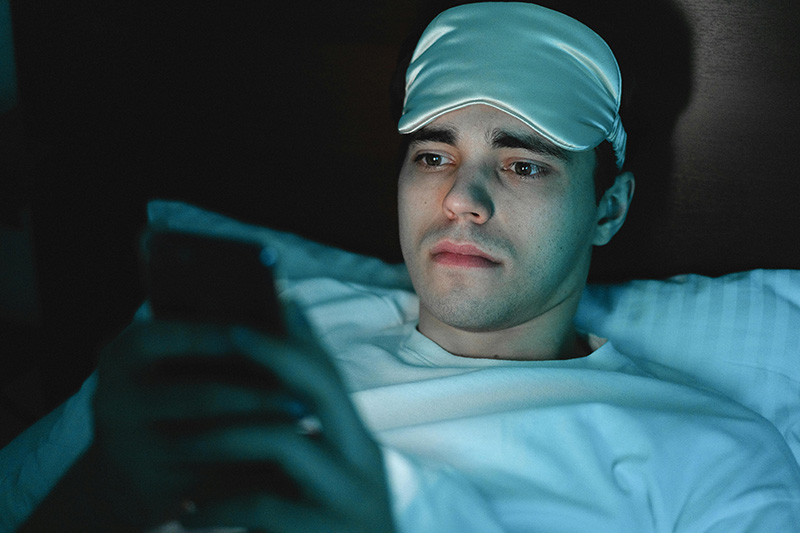
In 2017 a team at Rush University Medical Center published a case series describing patients whose insomnia was being caused or worsened by preoccupation with their sleep tracker data. They named it orthosomnia — from ortho, correct, and somnia, sleep — the pursuit of a perfect sleep metric as distinct from simply wanting to sleep well.
The mechanism is straightforward. Anxiety is among the most potent drivers of insomnia. The moment sleep becomes a performance to be measured and optimised, you introduce exactly the cognitive arousal that makes falling and staying asleep impossible. The harder you try, the worse the numbers. The worse the numbers, the harder you try.
In the original cases, all three patients were spending excessive time in bed trying to raise the sleep duration their device reported — which is the opposite of what cognitive behavioural therapy for insomnia recommends. CBT-I deliberately restricts time in bed to build sleep pressure and improve efficiency. The tracker-driven behaviour was directly undermining the treatment.
A 2024 cross-sectional study of 523 adults found orthosomnia in between 3 and 14% of tracker users depending on how strictly it was defined, with consistently higher insomnia severity scores in that group. Surveys suggest around 23% of users aged 18 to 35 report that their sleep app makes them more stressed about sleep.
If that describes your relationship with your device, the intervention is not a better tracker. If insomnia rather than breathing is your problem, my article on sleep hygiene covers what the evidence actually supports — and, importantly, why sleep hygiene alone is rarely enough for genuine insomnia.
How to use a tracker sensibly
None of this means the devices are worthless. The issue is the relationship people have with them rather than the technology itself. A few principles, broadly in line with guidance from the American Academy of Sleep Medicine:
- Wear it consistently to establish your own baseline, rather than comparing yourself to population averages.
- Look at trends across weeks and months, not individual nights.
- Check the data in the morning only. Never in the middle of the night.
- Weight the reliable metrics. Duration and resting heart rate are worth attention; deep sleep and REM percentages are rough approximations.
- Use it as behavioural feedback. Does your sleep shorten in weeks when you drink more? Does your resting heart rate rise after poor nights? That is the appropriate use case.
- Be honest about the effect on you. If checking it leaves you more anxious rather than better informed, stop.
- Trust your body over the device. If the score says fine and you feel terrible, believe yourself.
When the answer is a proper test
The signal worth acting on is not a low sleep score. It is persistent, unexplained daytime fatigue in someone who appears by every other measure to be sleeping adequately — particularly alongside snoring, morning headaches, a very dry mouth on waking, getting up repeatedly at night to pass urine, or a partner who has noticed pauses in your breathing.
That person needs assessment, not another gadget. NICE recommends home respiratory polygraphy as the first-line test: a small device worn overnight in your own bed that records airflow, breathing effort, oxygen saturation, pulse, snoring and body position. Full polysomnography, which adds brain wave recording, is reserved for cases where a simpler negative test does not fit the symptoms.
I can arrange the full range — a straightforward posted single-night screen, multi-night recordings that capture how much your breathing varies, advanced studies that add body position and REM data, full home polysomnography set up at your home by a sleep technologist, and detailed manual analysis for suspected upper airway resistance syndrome, which is the pattern most often missed in people whose earlier study was reported as normal.
Through the ISMA clinic at Harley Street you complete a home sleep study, Professor Vik Veer — ENT consultant sleep surgeon and Founding Chair of the British Association of Sleep Surgeons — produces a personalised video and written report explaining exactly what your data shows, and then you see me in person to be examined, review your blood results and agree a plan. It is £395 and no referral is needed. The point of it is that you get real numbers you can act on, and a clinician to interpret them, rather than a score and a generic tip.
A final thought
There is something admirable about the impulse behind all of this — the recognition that sleep is an active physiological process worth attending to rather than a passive gap between days. Sleep medicine spent decades arguing against the cultural celebration of exhaustion, and a generation of people taking their sleep seriously is not a bad outcome.
The complication is that a very large consumer technology industry has redirected that attention towards metrics that are, at best, approximate — and which are silent on the one thing most likely to be seriously wrong. A device costing several hundred pounds cannot tell you whether your airway is obstructing, whether your sleep is genuinely restorative, or whether the fatigue you feel warrants investigation.
Your body remains a better instrument than your tracker. When the two disagree, believe your body — and if it keeps telling you something is wrong, come and have it looked at properly.
Get a real answer about your sleep
A home sleep study measures what a wearable cannot: airflow, breathing effort, oxygen levels and body position. Arranged and interpreted at Harley Street.
About the sleep clinic 0207 935 1711Frequently asked questions
Can a smartwatch or ring detect sleep apnoea?
Not reliably, and none should be treated as a diagnostic test. Consumer trackers estimate sleep from body movement and an optical heart rate sensor. They do not measure airflow through the nose and mouth, and they do not measure the effort you are making to breathe — the two things a sleep study depends on.
Some newer devices include a breathing disturbance or sleep apnoea notification feature. These can be a useful prompt to seek assessment, but a negative result does not exclude the condition, and a positive one still needs a proper sleep study to confirm.
How accurate are sleep trackers?
It depends what you ask them. For whether you were asleep or awake, independent laboratory studies comparing devices against polysomnography have found agreement of around 86 to 89%.
For classifying which stage of sleep you were in — light, deep or REM — agreement drops to roughly 50 to 65%. The sleep stage percentages people pay most attention to are the numbers these devices are least good at.
My sleep score is normal but I still feel exhausted. What does that mean?
It means your tracker cannot see whatever is causing the problem, and that pattern is worth taking seriously rather than dismissing. Someone with thirty or forty breathing pauses an hour can produce a completely normal-looking sleep score, because the device is blind to the mechanism.
Persistent unexplained fatigue in someone who appears by every other measure to be sleeping adequately — particularly with snoring, morning headaches, a dry mouth or witnessed pauses — is exactly the picture that warrants a sleep study.
Should I worry about low deep sleep on my tracker?
Usually not, for two reasons. Sleep stage classification is the least accurate thing these devices do, and normal deep sleep varies far more than people realise — for a seven-hour sleeper the healthy range is roughly 42 to 84 minutes.
Deep sleep also declines by around 2% per decade from the age of twenty as a normal part of ageing, and night-to-night variation in healthy adults has a standard deviation of around 67 to 86 minutes of total sleep. A single unusual night is biology, not a warning sign.
What is orthosomnia?
Orthosomnia is a term coined by researchers in 2017 to describe insomnia caused or worsened by preoccupation with sleep tracker data — the pursuit of a perfect sleep score.
Anxiety is one of the strongest drivers of insomnia, so treating sleep as a nightly performance to be optimised produces exactly the cognitive arousal that prevents it. Studies have found orthosomnia in between 3 and 14% of tracker users depending on definition, with higher insomnia severity scores in that group.
What do sleep trackers measure well?
Three things are genuinely useful. Total sleep duration is reasonably reliable, especially as a trend over weeks. Resting heart rate and heart rate variability during sleep are measured accurately — validation studies place consumer wearables within about one beat per minute of clinical ECG.
And behavioural feedback is valuable: noticing that your sleep shortens in weeks when you drink more, or that late meals correlate with more fragmented data, can genuinely change behaviour. Trends over weeks and months are where the signal is; individual nightly scores are mostly noise.
Is the blood oxygen feature on my watch useful for sleep apnoea?
It is better than nothing but it is not a diagnostic test. Wrist-based oxygen sensors are affected by movement, skin tone, temperature and how tightly the device is worn, and the sampling rate is generally too low to capture the brief repeated dips that characterise sleep apnoea.
Even in medical practice, overnight oximetry on its own is regarded as a limited test — it picks up obvious severe disease and misses a good deal else, which is why NICE positions it as an alternative where access to respiratory polygraphy is limited rather than as an equivalent.
Are snoring recording apps useful?
Within limits, yes — more so than sleep staging. An app that records audio overnight can demonstrate that snoring is happening, roughly how loud it is, and sometimes the pattern of interruptions. Hearing your own snoring stop abruptly and resume with a gasp is often what finally prompts people to get tested.
What it cannot do is measure whether your oxygen levels fell or how much effort you were making to breathe. It is a useful prompt, not a diagnosis.
How should I use a sleep tracker sensibly?
Wear it consistently to establish your own baseline. Look at trends across weeks rather than interpreting single nights. Check the data in the morning only, never in the middle of the night. Focus on the metrics that are reliable — duration and resting heart rate — rather than deep sleep and REM percentages.
And ask yourself honestly whether checking it leaves you better informed or more anxious. If your body and your tracker disagree, trust your body.
What test does diagnose sleep apnoea?
A sleep study. NICE recommends home respiratory polygraphy as the first-line test — a device worn overnight that measures airflow, breathing effort, oxygen saturation, pulse, snoring and body position. Full polysomnography, which adds brain wave recording, is reserved for cases where a simpler negative test does not fit the symptoms.
Most studies are now done at home, which is more representative than a night in an unfamiliar sleep laboratory bed. The device is posted or couriered to you and returned afterwards.
Key sources
- Chinoy ED, et al. Performance of seven consumer sleep-tracking devices compared with polysomnography. Sleep. 2021;44(5):zsaa291.
- Robbins R, et al. Accuracy of three commercial wearable devices for sleep tracking in healthy adults. Sensors. 2024;24(20):6532.
- Baron KG, et al. Orthosomnia: are some patients taking the quantified self too far? Journal of Clinical Sleep Medicine. 2017;13(2):351–354.
- National Institute for Health and Care Excellence. Obstructive sleep apnoea/hypopnoea syndrome and obesity hypoventilation syndrome in over 16s (NG202), August 2021.