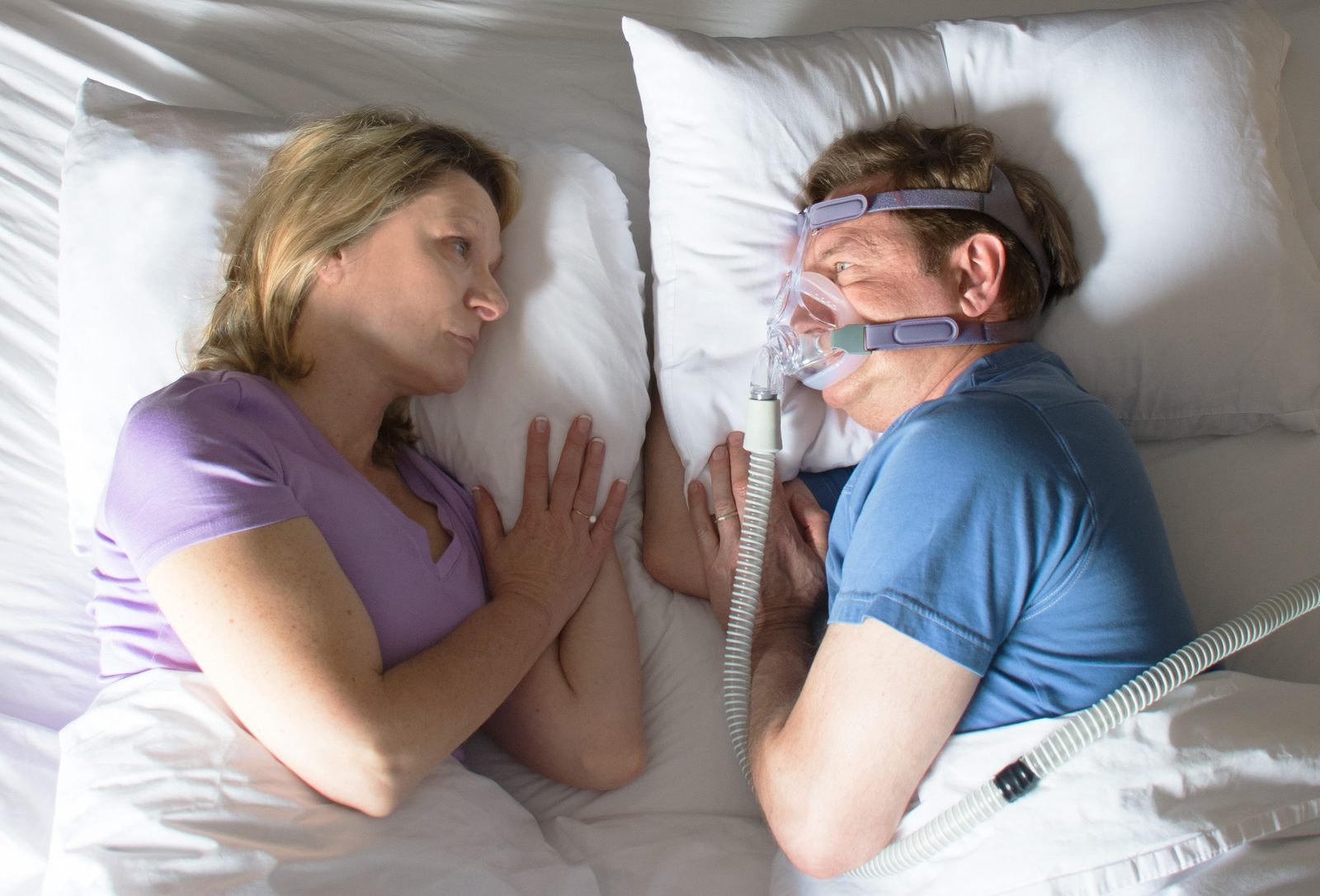
Before you start CPAP: why your nose and tonsils should be checked first
CPAP is the most effective treatment for moderate and severe obstructive sleep apnoea. Its weakness is not effectiveness but tolerance — a large proportion of people stop using it, and most of those who do give up in the first few weeks. A blocked nose is one of the commonest reasons, and it is entirely preventable. NICE guidance says the nose and throat should be dealt with as part of treatment, not afterwards.
- NICE NG202 recommends assessing people with nasal congestion for rhinitis and treating it, and considering tonsillectomy where there are large obstructive tonsils and a BMI below 35.
- A blocked nose makes CPAP feel intolerable. It pushes you towards mouth leak, a bulkier full-face mask and higher pressures.
- Fix it first. A steroid nasal spray at the right dose, used with the right technique, started several weeks before the machine.
- The first fortnight sets the pattern. A difficult start is the single best predictor of abandoning treatment altogether.
- If CPAP still cannot be tolerated, there are recognised alternatives — a custom mandibular advancement splint, positional therapy, and surgical assessment for selected patients.
Of all the things I see done in the wrong order in sleep medicine, this is the one that costs patients most.
Someone is diagnosed with obstructive sleep apnoea, is issued with a CPAP machine, takes it home, and finds it unbearable. They cannot breathe through their nose against the pressure. They open their mouth, air rushes out, their throat dries to sandpaper, they wake at three in the morning and pull the mask off. After a fortnight of this the machine goes into the cupboard, and when they are asked about it at follow-up they say CPAP was not for them.
In a good number of these cases the problem was never CPAP. It was a nose that had been blocked for twenty years and that nobody looked at.
What CPAP is, and why it works
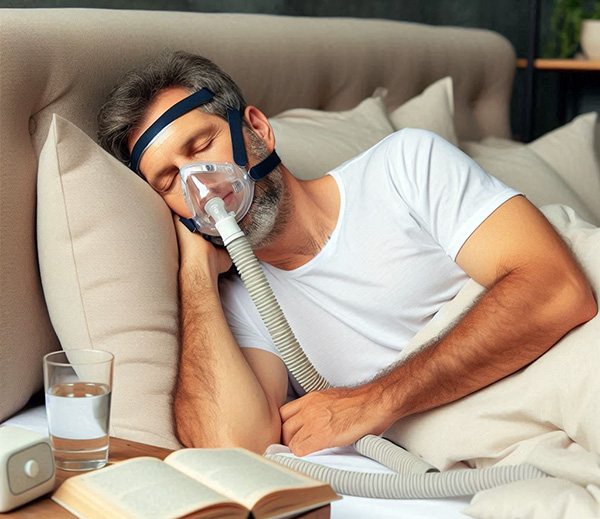
CPAP stands for continuous positive airway pressure. A small quiet pump delivers a steady stream of pressurised air through a tube to a mask worn over the nose, or over the nose and mouth. That column of air acts as a pneumatic splint: it holds the walls of the throat apart so they cannot collapse when the muscles relax during sleep.
It is remarkably effective. Used properly it abolishes apnoeas in most people, restores normal oxygen levels, allows sleep architecture to reassemble, lowers blood pressure, and reduces crash risk by around 70%. NICE recommends it as first-line treatment for moderate and severe obstructive sleep apnoea, and for mild disease where symptoms are affecting quality of life or where there are priority factors such as vocational driving.
The catch is that it only works while you are wearing it. There is no residual benefit the following night. That makes tolerance not a secondary consideration but the whole game.
Why people stop using it
Adherence to CPAP has been a recognised problem for as long as the treatment has existed, and the figures in the published literature are sobering — a substantial proportion of patients stop within the first week, and long-term discontinuation rates in some series exceed 80%. The reasons people give are consistently practical:
- They cannot get enough air through their nose against the pressure.
- The mask does not fit and leaks, often into the eyes.
- The nose and mouth dry out overnight, or the nose runs constantly.
- The mask feels claustrophobic.
- The pressure feels too high to breathe out against.
- The noise or the tube disturbs a partner.
Every single one of these has a specific technical solution. Difficulty breathing through the nose is a well-recognised predictor of CPAP non-adherence, and it is the one most likely to have been present long before the diagnosis of sleep apnoea was ever made.
You get one good first impression of CPAP. If the first two weeks are miserable, most people never fully commit to it, and the opportunity is largely lost — going back to it years later is much harder. It is far better to spend six weeks preparing the airway and then start well than to start immediately and fail.
What NICE actually recommends
The relevant guidance is NICE NG202, covering obstructive sleep apnoea/hypopnoea syndrome in people over 16. Two of its recommendations are directly relevant here and are, in my experience, the two most frequently skipped.
On the nose: assess people with nasal congestion for underlying allergic or vasomotor rhinitis, and treat it if confirmed — with topical nasal corticosteroids or antihistamines for allergic rhinitis, and topical nasal corticosteroids for vasomotor rhinitis. The guideline also notes that changing from a nasal to an orofacial mask and adding humidification can help with CPAP tolerance, and that heated humidification should be considered for nasal and mouth dryness or CPAP-induced rhinitis.
On the tonsils: consider tonsillectomy if the person has large obstructive tonsils and a BMI below 35 kg/m². The BMI threshold is not arbitrary — above it, people are more likely to have obstruction at several levels of the airway at once, so removing the tonsils alone is less likely to resolve the problem.
Both of these sit above the CPAP recommendations in the treatment pathway, alongside giving information about the options and discussing tailored lifestyle changes. They are not salvage measures for when CPAP has failed. They are part of setting it up to succeed.
NICE identifies several groups who should be prioritised for rapid assessment: people in vocational driving or other vigilance-critical jobs, people with unstable cardiovascular disease, women who are pregnant, people being assessed before major surgery, and people with non-arteritic anterior ischaemic optic neuropathy. If you fall into one of these groups, the assessment should not be sitting on a waiting list.
Step one: the nose
CPAP pushes air in. If the nose is blocked, that air has nowhere comfortable to go.
What happens next is predictable. The person opens their mouth to breathe, which produces mouth leak — air blowing straight out through the lips, drying the throat and reducing the effective pressure reaching the airway. The machine, if it is an auto-titrating device, responds by pushing harder. The person is then moved to a full-face mask, which is bulkier, seals less reliably and feels more claustrophobic. Each step makes the next one worse.
Treat the nose first and this chain never starts. You are more likely to manage with a small nasal pillow or nasal mask, at a lower pressure, with the mouth closed.
The nasal spray, and the dose that actually works
For most people the right treatment is a steroid nasal spray. I recommend fluticasone propionate, which is the active ingredient in Flixonase. It can be prescribed by an NHS GP, or bought over the counter under its generic name at the same strength.
The dose is two sprays into each nostril, twice a day, continued long term. That is more than most people are told, and for much longer than most people keep going. Steroid sprays work by reducing inflammation in the lining of the nose, particularly in the turbinates — the ridged structures on the side walls of the nasal cavity that warm and humidify the air you breathe. Swollen turbinates block airflow and drive mouth breathing. They take a couple of weeks of consistent use to settle down, and they swell straight back if the spray is stopped.
Ideally, start the spray four to six weeks before your CPAP set-up appointment.
Technique matters as much as the drug
A great many people use these sprays in a way that guarantees they will do nothing. The three common errors are aiming the nozzle straight up towards the top of the head, aiming inwards at the septum, and sniffing hard afterwards so the medication runs down the back of the throat.
The method that works: use the opposite hand — left hand for the right nostril — tilt your head slightly forwards rather than back, aim outwards towards the ear on that same side, and then breathe in only very gently. If you can taste it at the back of your throat, it has gone past the part of the nose you were trying to treat.
Do not use decongestant sprays such as Otrivine, Sudafed or Vicks for more than four or five days. They work by cutting blood flow to the nasal lining, and when they wear off the body floods the nose with blood, leaving it more blocked than before. Prolonged use causes rhinitis medicamentosa — a genuine dependence that can require surgery to resolve. If you are already using one several times a day, say so; it is fixable, but only once the spray is stopped.
If the spray is not enough
Where the blockage is allergic, treating the allergy properly matters — identifying the trigger, whether that is house dust mite, pets, pollen or mould, and treating consistently rather than seasonally. Combined antihistamine-and-steroid sprays are useful where itching, sneezing and running are prominent alongside blockage. My guide to hay fever and allergic rhinitis covers this in detail and much of it applies year-round.
Where the spray makes no difference at all, the problem is more likely to be structural: a deviated septum, enlarged bony turbinates, or nasal polyps. A deviated septum in particular rarely responds to any spray. Turbinate reduction can often be done under local anaesthetic with few complications; septoplasty is a larger undertaking. Both can transform CPAP tolerance in the right patient — which is exactly why the assessment should happen before the machine is issued rather than two years into a failed trial.
Re-learning nasal breathing
Once the nose is open, some people carry on breathing through the mouth at night purely from habit, having done it for years. A chin strap worn overnight holds the mouth gently closed and prompts the body to revert to nasal breathing; it usually takes four to six weeks, after which it can be discarded. A soft cervical collar is an alternative that supports the jaw and neck and helps keep the airway open. Both are also useful for managing mouth leak in someone already on CPAP.
I would avoid mouth taping. Sealing the lips removes the mouth as a back-up airway, and if your sleep apnoea is not yet fully controlled that matters.
Step two: the throat
Nobody can tell whether your tonsils are obstructing without looking at them, and a surprising number of people diagnosed with sleep apnoea have never had their throat examined.
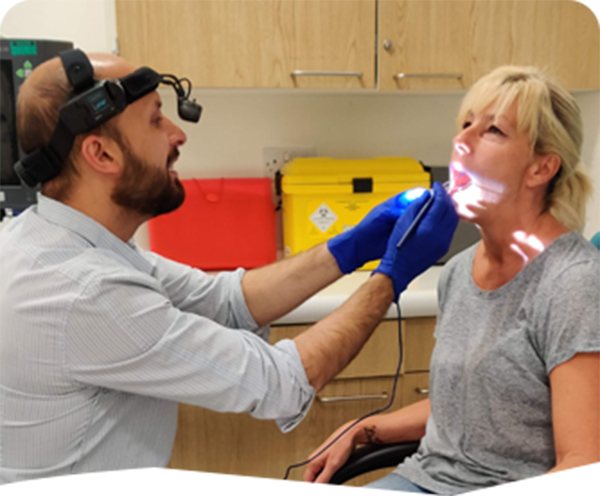
Large tonsils — the kind that touch or nearly touch in the midline — narrow the airway at exactly the level where obstruction usually occurs. Where they are the dominant problem, and BMI is below 35, NICE supports considering tonsillectomy. In the right patient this can produce a substantial fall in the apnoea-hypopnoea index, and occasionally removes the need for CPAP altogether. In children, enlarged tonsils and adenoids are by far the commonest cause of obstructive sleep apnoea and removing them is usually the primary treatment.
To be clear, most adults with sleep apnoea do not have large tonsils, and tonsillectomy in adults is not a minor procedure — recovery is genuinely uncomfortable for a couple of weeks. The point is not that everyone should have it. The point is that the question should be asked, because for the minority in whom it applies, the answer changes everything.
An examination should also cover the shape and position of the lower jaw, the height and width of the palate, the size of the tongue relative to the mouth, and the length of the soft palate and uvula. These determine which treatments are likely to work and which are not.
Step three: everything else that makes CPAP easier
Several other things are worth putting in place before or alongside starting.
-
Get the mask right
Nasal pillows, nasal masks and full-face masks all suit different faces and different breathing patterns. Facial hair, glasses, the way you sleep and whether you mouth-breathe all affect the choice. A mask that leaks is not something to tolerate; it is something to change.
-
Ask for heated humidification
NICE specifically supports considering heated humidification for upper airway side effects such as nasal and mouth dryness and CPAP-induced rhinitis. It makes a considerable difference to comfort and is not an optional extra for most people.
-
Use the ramp and get the pressure checked
A ramp setting starts the pressure low and builds it gradually while you fall asleep. If you are struggling to breathe out against the pressure, that is worth raising — NICE supports considering auto-titrating CPAP instead of fixed-level where high pressure is only needed at certain times, or where fixed-level is not tolerated.
-
Deal with position and alcohol
If your apnoea is much worse on your back, side sleeping reduces the pressure the machine needs to deliver. Alcohol in the evening relaxes the airway and undermines the whole exercise.
-
Start the throat exercises
Myofunctional therapy — a daily set of tongue, palate and throat exercises — reduces apnoea-hypopnoea index by around 50% in published trials. It costs nothing and carries no risk, and it complements CPAP rather than competing with it.
-
Ask for telemonitoring and follow-up
NICE recommends offering telemonitoring for up to 12 months, tailoring follow-up to the individual, and offering educational or supportive interventions by trained specialists to improve adherence. Problems picked up in week one are fixable; problems discovered at a twelve-month review usually are not.
How much CPAP is enough?
The standard people are usually given is four hours a night on 70% of nights. It is worth understanding where that figure comes from: it is a licensing and funding threshold, not a clinical target.
Sleep apnoea resumes the instant the mask comes off. If you sleep for eight hours and wear CPAP for four, half of your night is entirely untreated — and because deep and REM sleep are unevenly distributed through the night, the untreated half is often the half where obstruction is worst. Research on patients meeting only the minimum threshold has found average residual apnoea-hypopnoea indices still in the range that defines sleep apnoea.
So: four hours on 70% of nights is what the DVLA will accept as evidence of compliance. All night, every night, is what will actually make you feel well.
If CPAP genuinely is not tolerable
Some people, having had a proper trial with an open nose, a well-fitted mask and humidification, still cannot use it. That is a legitimate outcome and there are recognised alternatives.
A mandibular advancement splint. NICE recommends considering a customised or semi-customised device for people aged 18 and over with good dental and periodontal health who cannot tolerate or decline CPAP. It holds the lower jaw slightly forward overnight, pulling the tongue and attached soft tissues forwards. It should be made by a dentist trained in sleep medicine and adjusted over several visits — the mail-order boil-and-bite versions fit poorly and are responsible for most of the jaw ache and tooth movement these devices get blamed for. I refer to dental colleagues who work specifically in this field.
Positional therapy. NICE supports considering a positional modifier for mild or moderate positional disease where other treatments are unsuitable or not tolerated. In one large audit of over six thousand sleep studies, 60.3% of patients had a normal apnoea-hypopnoea index simply when lying on their side.
Weight loss. A 10% fall in body weight is associated with roughly a 26% fall in apnoea-hypopnoea index. Rarely curative alone, but it improves the results of everything else.
Surgical assessment. NICE recommends considering referral for assessment for oropharyngeal surgery in people with moderate or severe disease who have been unable to tolerate both CPAP and a customised mandibular advancement splint despite medically supervised attempts.
What surgical assessment involves
The first step is not an operation but an investigation, and it is worth understanding what it is for.
A drug-induced sleep endoscopy (DISE) uses a small dose of sedative to produce a sleep-like state while a fine flexible camera is passed through the nose to watch the airway. It takes about twenty-five minutes. Because the airway is observed while it is actually collapsing, DISE shows which structures are responsible and in what order — the palate, the tonsils, the side walls of the throat, the tongue base or the epiglottis. No other test can do this; scans and clinic examinations show the anatomy but not the behaviour. A hospital classifies DISE as an operative procedure, so it requires fasting and routine pre-operative checks, and there is a small risk of a nosebleed.
What follows depends entirely on the findings. In outline: nasal procedures such as septoplasty and turbinate reduction open the nose and improve tolerance of everything else; palate and uvula procedures stiffen or reduce tissue that is vibrating or collapsing; tonsil and pharyngeal wall procedures address collapse at that level; tongue base procedures reduce or reposition the tongue where it is falling backwards; and for selected patients with severe disease who cannot use CPAP, an implanted hypoglossal nerve stimulator gently activates the tongue muscles in time with each breath. Each of these is a sentence here on purpose — which one matters only becomes clear once the airway has been looked at.
The ISMA sleep clinic at Harley Street exists to join these steps up. I run it with Professor Vik Veer, an ENT consultant sleep surgeon and Founding Chair of the British Association of Sleep Surgeons. The assessment includes a home sleep study, a personalised video and written report from Professor Veer explaining exactly what your results show, and then a face-to-face consultation with me — where I examine your nose and throat, review your blood results, and we agree the plan. If it turns out you need surgical assessment, you are not starting again at the beginning of another queue. Professor Veer sets out the surgical detail in full in his guide to DISE and the PTLTbE classification.
If you are already struggling with CPAP
None of the above is only relevant before you start. If the machine is already in the cupboard, or you are using it for two hours and pulling it off, the same questions apply — and they are worth asking now rather than at your next annual review.
Can you breathe through both nostrils, lying down, with your mouth closed? Have your tonsils been looked at? Is your mask the right type for your face and your breathing? Do you have heated humidification? Has your pressure been reviewed since the machine was set up? Is your apnoea positional, and are you sleeping on your back? Are you drinking in the evening?
I can work through all of these in a consultation, treat what is treatable in general practice, and arrange onward assessment for the parts that are not. In my experience the majority of people described as CPAP failures have never had a systematic look at why.
Set CPAP up to succeed
A consultation at Harley Street to examine your nose and throat, treat what is treatable, review your machine and mask, and arrange specialist assessment where it is needed.
Book an Appointment 0207 935 1711Frequently asked questions
Why do so many people give up on CPAP?
Most people who abandon CPAP do so within the first few weeks, and the reasons are practical rather than a lack of willpower: a blocked nose that makes the pressure feel unbearable, a mask that does not fit, air leaking into the eyes, dryness of the nose and mouth, or claustrophobia.
Nasal obstruction in particular is a well-recognised predictor of poor adherence. Almost all of these problems are fixable, and most are far easier to address before the machine is started than after a bad first fortnight has set expectations.
What does NICE say should happen before starting CPAP?
NICE guideline NG202 recommends assessing people with obstructive sleep apnoea and nasal congestion for allergic or vasomotor rhinitis and treating it if confirmed — with topical nasal corticosteroids, or antihistamines in allergic rhinitis. It also recommends considering tonsillectomy for people with large obstructive tonsils and a BMI below 35 kg/m².
Alongside this it advises giving information about all the treatment options, discussing tailored lifestyle changes, and offering heated humidification and mask changes where CPAP causes nasal or mouth dryness.
Can a blocked nose stop CPAP from working?
It rarely stops it working outright, but it makes it much harder to use. CPAP delivers pressurised air, and if the nose is blocked that air cannot get through comfortably.
People compensate by opening their mouth, which causes leak and dryness, or are moved to a full-face mask, which is bulkier and leaks more. Higher pressures are then needed to achieve the same effect. Treating nasal obstruction first usually means a lower pressure, a smaller mask, and a far better first experience.
Which nasal spray should I use before starting CPAP?
A steroid nasal spray such as fluticasone propionate — the active ingredient in Flixonase — is the usual choice. The effective dose is two sprays into each nostril twice a day, continued long term rather than for a couple of weeks. It can be prescribed by an NHS GP or bought over the counter under its generic name.
Start it four to six weeks before CPAP if you can, because the turbinates take time to settle. Pay close attention to technique: use the opposite hand, tilt your head slightly forward, aim outwards towards the ear on the same side, and breathe in gently rather than sniffing hard.
Should I have my tonsils out before starting CPAP?
Only if they are genuinely large and obstructing. NICE recommends considering tonsillectomy in people with obstructive sleep apnoea who have large obstructive tonsils and a BMI below 35 — the threshold reflects the fact that people above it are more likely to have obstruction at several levels at once, so tonsil surgery alone is less likely to solve the problem.
Most adults with sleep apnoea do not have large tonsils, and tonsillectomy in adults is not a minor procedure. The point is that nobody can tell without looking, so an examination of the throat should be part of the assessment.
What counts as good CPAP compliance?
The widely used minimum standard, and the one the DVLA works to, is four hours a night on at least 70% of nights. That is a licensing threshold rather than a health target.
Sleep apnoea returns the moment the mask comes off, so if you sleep for eight hours and use CPAP for four, half your night is untreated. For symptom control and cardiovascular benefit the aim should be to use it all night, every night.
What are the alternatives if I cannot tolerate CPAP?
First, make sure it has had a fair trial: an unblocked nose, the right mask, heated humidification, ramp settings adjusted, and consideration of auto-titrating rather than fixed pressure.
If it still cannot be tolerated, NICE recommends a customised or semi-customised mandibular advancement splint for people aged 18 and over with good dental and gum health. Positional therapy is an option for mild or moderate positional disease, and referral for assessment for oropharyngeal surgery is recommended for moderate or severe disease where CPAP and a splint have both failed.
Does treating my nose mean I will not need CPAP at all?
Usually not. Nasal obstruction is rarely the sole cause of obstructive sleep apnoea, and opening the nose on its own does not reliably lower the apnoea-hypopnoea index.
What it does is make the airway easier to manage and every other treatment easier to use — CPAP at a lower pressure, a mandibular advancement device with the mouth closed, and better sleep quality generally. Occasionally, in mild positional disease, treating the nose alongside side sleeping and weight loss is enough on its own.
How long should I try CPAP before deciding it is not for me?
Give it a properly supported four to six weeks before drawing conclusions — but do not spend that time struggling in silence.
If the first week is difficult, the answer is to change something: the mask, the humidification, the pressure setting, the nasal treatment. Most problems have a specific fix. The people who succeed with CPAP long term are usually the ones whose difficulties were addressed quickly at the start.
Can I stop CPAP if I lose weight or have surgery?
Possibly, but not without retesting. NICE advises considering stopping treatment if the sleep apnoea may have resolved, and then re-evaluating after at least two weeks without treatment — looking for any return of symptoms and considering a repeat sleep study.
This should be a planned process with your doctor rather than a decision made unilaterally, particularly if you drive. If your licence is conditional on treatment, stopping without evidence that your apnoea-hypopnoea index has fallen below 15 has legal implications as well as medical ones.
Key source
- National Institute for Health and Care Excellence. Obstructive sleep apnoea/hypopnoea syndrome and obesity hypoventilation syndrome in over 16s (NG202), August 2021. nice.org.uk/guidance/ng202